
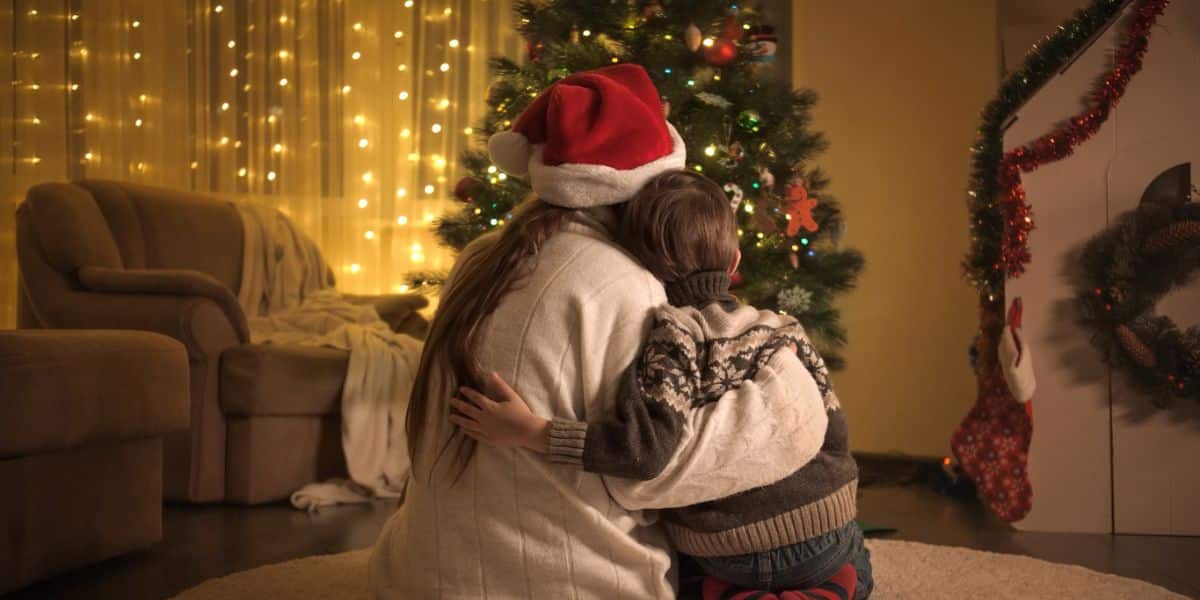
Christmas isn’t really one holiday when you’re sharing custody. There’s Christmas Eve, Christmas Day, and then a full week or two of winter break that follows right behind it. Each piece can matter for a different reason. Christmas Eve might carry a family dinner or a church service. Christmas Day is usually about gift-opening and time together. And winter break is just a long stretch of days off school that needs its own plan. A Christmas custody schedule that treats the whole thing as one single day tends to leave out most of what actually needs figuring out.
This guide walks through how families usually split Christmas Eve and Christmas Day, how winter break fits into the picture, how to handle a few situations that don’t fit the standard mold, and what’s worth writing down so the season goes smoothly instead of turning into something you’re negotiating every December.
Why Christmas Needs More Than One Line in Your Schedule
A lot of parenting plans treat Christmas like any other single-day holiday, the same way they’d treat a birthday or Presidents’ Day. That doesn’t really match what Christmas looks like for most families. Christmas Eve often has its own traditions attached to it. Christmas Day usually centers on the morning and the gifts. And winter break, which can run close to two weeks depending on the school district, is a whole separate stretch of time that needs its own arrangement.
If your custody order just says “Christmas alternates each year” without breaking down what that actually covers, you and your co-parent might end up reading it two completely different ways. Does that include Christmas Eve? Does it stretch through New Year’s? Spelling out each piece separately heads off that kind of disagreement before it has a chance to start, and it also gives your child a clearer sense of what to expect each year, which matters more during a busy, overstimulating season than it might during an ordinary weekend.
Common Ways to Split a Christmas Custody Schedule
Most families land on one of a few patterns when they sit down to build a Christmas custody schedule.
Alternating the whole holiday. One parent has Christmas Eve through Christmas Day in even years, the other in odd years. It’s simple, and it gives each parent a full, uninterrupted holiday every other year. The tradeoff is missing the actual day completely in the years you don’t have it.
Splitting Christmas Eve and Christmas Day. A lot of families give one parent Christmas Eve through Christmas morning, often wrapping up around noon, and the other parent gets the rest of Christmas Day. The order flips the next year. This way, both parents get to be part of the holiday every single year, just on different halves of it.
Keeping one day fixed. Some families keep the same day with the same parent every year, especially when a specific tradition, like a Christmas Eve service or a big family dinner, is tied to one household. They alternate the other day instead.
Two full celebrations. A smaller number of families choose to celebrate Christmas twice, once with each parent on separate days, so gift-opening and the full holiday routine happen in both homes. This isn’t the right fit for every family, and it can blur the meaning of “Christmas Day” itself, but some parents prefer it because neither one misses out on the full experience.
There’s no single right way to do this. What matters more is picking something that actually fits your family’s traditions and getting it in writing. Our collection of holiday schedule examples walks through similar alternating and splitting patterns that show up across different holidays, Christmas included.
Building a Shared Custody Christmas Schedule for Winter Break
Christmas Day itself is only part of the picture. Most school districts give kids anywhere from one to two weeks off around the holidays, and a shared custody Christmas schedule needs to cover that entire stretch, not just December 25th.
Families usually handle winter break one of two ways. Some split the break in half, with one parent getting the first week and the other getting the second, often dividing things right around Christmas Day or New Year’s. Others treat winter break as its own separate rotation entirely, alternating who gets the longer stretch each year regardless of who has Christmas Day itself that year.
New Year’s Eve and New Year’s Day are worth naming specifically within this stretch as well, since they sometimes get overlooked when parents focus mainly on Christmas. Some families pair New Year’s with whichever parent didn’t have Christmas Day, so both holidays balance out across the winter break. Others treat New Year’s as its own fixed date, separate from how Christmas is split.
If your family already operates on a schedule that’s close to equal time, folding winter break into that structure tends to be pretty straightforward. If your regular schedule is more lopsided, it takes a bit more thought. Our guide to holiday schedules for 50/50 parenting arrangements covers some additional ways to think through longer breaks like this one when both parents already share time closely.
Whichever pattern you land on, write down the real dates each year applies to. School calendars shift a little from year to year, and a plan that just says “winter break” without dates attached can get confusing fast, especially when the break falls on slightly different days than it did the year before.
Handling Travel During the Holidays
Christmas is one of the busiest travel stretches of the entire year. AAA’s year-end holiday travel forecast shows well over 100 million Americans traveling 50 miles or more during the Christmas and New Year’s period each year, and most of them are driving. If your family’s plans involve a trip to see relatives out of state, or your child is splitting the holiday between two homes in different areas, it’s worth addressing travel directly in your Christmas custody schedule instead of leaving it as an afterthought.
A few things are worth settling ahead of time. Does your custody order require advance notice before traveling out of state with your child? Is there an expectation to share flight details or an itinerary? Winter weather also tends to cause its own headaches this time of year, so it helps to agree in advance on how a snowstorm or a canceled flight affects an exchange, rather than figuring it out in the moment while you’re both stressed and stuck at an airport.
Special Situations Worth Planning For
Not every family’s Christmas fits neatly into “alternate by year” or “split the day.” A few situations come up often enough to plan for directly.
Long-distance co-parenting. If you and your co-parent live far enough apart that a mid-holiday exchange isn’t realistic, alternating the entire holiday by year is usually the more practical choice. Some families also build in a smaller second celebration on a different day for the parent who doesn’t have Christmas that year, so the distance doesn’t mean missing the season entirely.
Blended families. If either parent has other children in the home, from a new relationship or a previous one, think about how Christmas morning works for the whole household, not just your shared child. Kids often want to open gifts and spend the day with siblings or stepsiblings, and a schedule that accounts for that tends to go over better than one that splits siblings apart on the actual holiday.
Different extended family obligations. If each parent’s extended family has its own Christmas traditions in different locations, it sometimes helps to alternate by side of the family rather than strictly by parent, especially if travel time factors in either way.
Older kids with their own plans. As kids get older, Christmas sometimes competes with time they want to spend with friends or a partner’s family. It’s worth revisiting your schedule every so often to make sure it still reflects what actually works for your child, rather than an arrangement built years earlier.
What New York and New Jersey Courts Consider When Christmas Isn’t Covered
If your custody order doesn’t specifically address Christmas, or you and your co-parent can’t agree on a new approach, the court can step in. In New Jersey, custody decisions are guided by N.J.S.A. 9:2-4, the state law that lists the factors judges weigh in a custody case, including how well the parents cooperate and how stable each home is. New York courts apply a similar best interests standard when they’re asked to weigh in on holiday scheduling disputes.
Judges generally want parents to work these details out on their own, since a plan you both agreed to tends to hold up better than one a court hands down for you. If your case does end up in front of a judge, showing up with specific reasoning, like your child’s school calendar or a family tradition that’s been consistent for years, tends to carry more weight than just asking for more time over the holidays in general terms.
When Parents Can’t Agree on a Christmas Custody Schedule
If you and your co-parent get stuck trying to work this out, you’ve got a few paths forward.
Mediation. A neutral third party can help you talk through the disagreement without going to court, and you both end up with more say in whatever plan comes out of it.
Court intervention. If your order doesn’t address Christmas at all, either parent can ask the court to add specific language covering Christmas Eve, Christmas Day, and winter break. This takes time to work through, so it’s worth starting well before the holiday season actually arrives.
Modification. If your current Christmas schedule used to work but doesn’t fit your family anymore, a formal modification is how you make a change that actually sticks, rather than renegotiating the same thing informally every single year.
Attorneys who handle child custody matters and parenting time and visitation disputes can help you figure out which option fits your situation, and what specific wording will actually hold up if this comes up again next year. If you’re in New Jersey and want more detail on how courts there tend to approach these holiday questions, our New Jersey parenting time guide for holidays covers that in more depth.
Common Mistakes to Avoid
A handful of mistakes show up again and again in Christmas custody disputes, and most of them are easy to head off with a little planning.
Treating Christmas as one undefined day. “Christmas,” without breaking out Christmas Eve, Christmas Day, and winter break separately, leaves way too much open to interpretation.
Leaving winter break out entirely. A plan that only covers December 25th ignores one to two weeks of time that also needs a schedule of its own.
Forgetting New Year’s. New Year’s Eve and Day sometimes get overlooked entirely when parents focus only on Christmas itself.
Not planning for travel. If either parent regularly travels for the holidays, build notice requirements and a weather backup plan into the schedule itself.
Skipping specific times. “Whoever has Christmas Eve” isn’t specific enough. Name an actual start and end time for the handoff.
Not writing it down. A verbal agreement that worked fine last December might not hold up this year, especially once new partners, new jobs, or new travel plans get added into the mix.
Settle It Before the Tree Goes Up
A workable Christmas custody schedule covers more ground than a single date on the calendar. Whether you split Christmas Eve and Christmas Day, alternate the whole holiday by year, or handle winter break as its own separate rotation, the plan that actually works is the one that spells out real dates, times, and travel expectations well before the season starts. A shared custody Christmas schedule built this way gives your child something steady to count on, and gives you one less thing to negotiate every single year.
If Christmas isn’t fully addressed in your current parenting plan, or your existing schedule isn’t holding up anymore, contact Krasner Law to talk through getting it in writing.